


The Core Metrics That Determine SaaS Success (And How to Build for Them)
The ability to develop SaaS successfully isn’t about luck; it’s about a deliberate focus on the metrics that signify long-term success.
Many founders chase the obvious metrics. These include total sign-ups and page views. But a handful of KPIs measure the true value of SaaS products. They’re the ones that point to cost-effectiveness, retaining users, and other data that suggest you’re on the right track.
So, to turn that killer concept into a successful SaaS product, you need to measure progress against some non-negotiable metrics. Let’s dive right in.
Why Many SaaS Companies Struggle with Core Metrics
When a new idea for a SaaS platform emerges, the excitement can be palpable. But it’s this excitement that instigates the need for speed… the desire for more features.
But cool heads are needed. Too many companies neglect core metrics in order to get the product to market as quickly as possible. It’s human nature. But these instincts can lead to major issues down the line — many of them costly.
Common pitfalls include:
- Complex onboarding that delays time-to-value
- Too many features
- Unnecessary design-based choices
- Waiting too long to track revenues
When users have a tricky experience or can’t identify the core benefit, they usually leave. This leads to churn at a very early stage of development — the death knell for further investment rounds.
But successful SaaS development takes into account every interface element, backend choice, and product roadmap item. Each is evaluated against its projected impact on activation, retention, and revenues.
How to Build SaaS Successfully: The Core Metrics That Really Matter
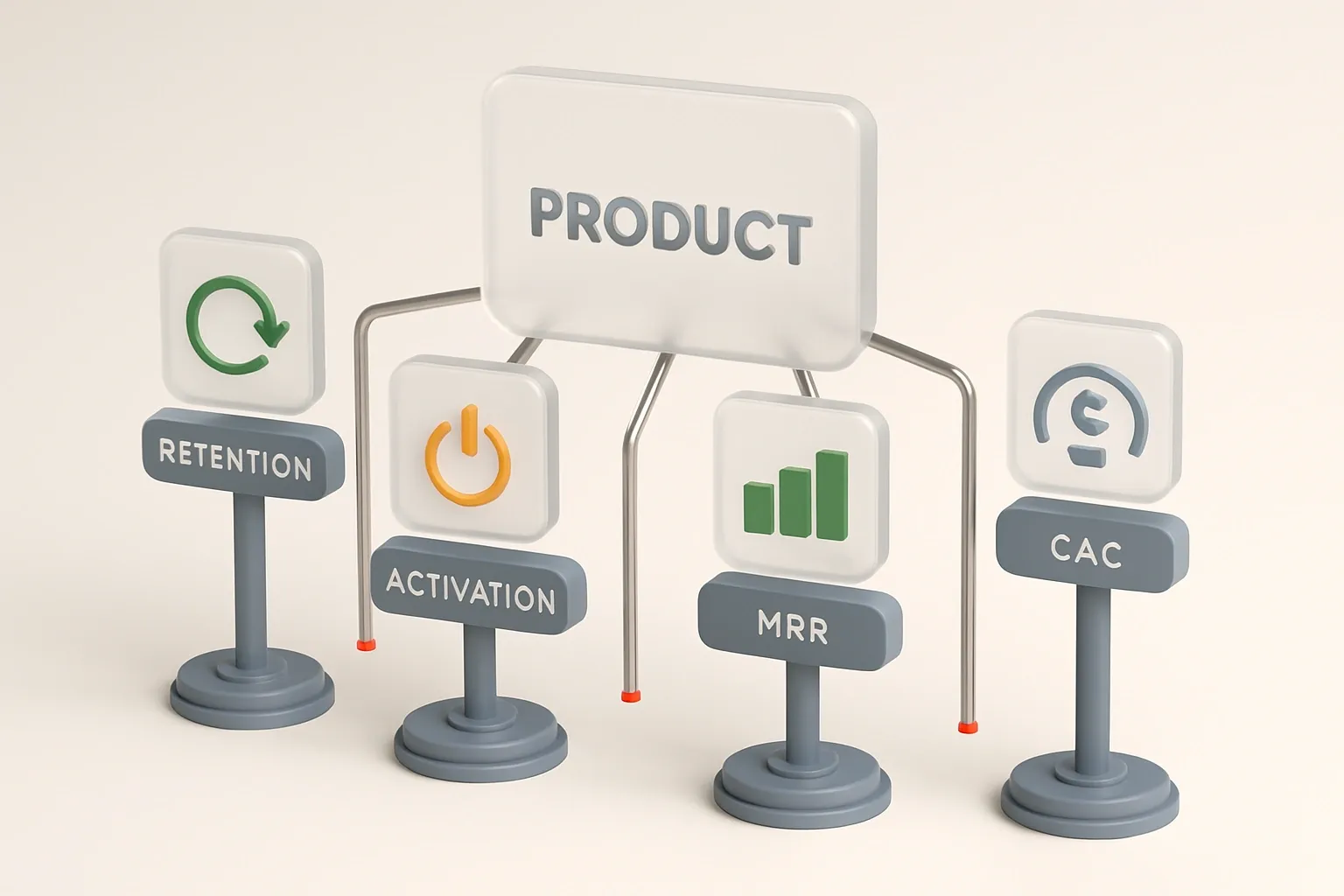
Only a handful of metrics show if a SaaS business will stand the test of time. Experienced software development teams know what they are through sheer experience and repetition, which is why turning to experts is often the most cost-effective solution in the long term.
Retention
Retention refers to the number of users who keep coming back after the initial launch period. Good retention rates are the foundations for long-term success.
Activation Rate
The activation rate is the percentage of new users who see the value in your product quickly. A low rate suggests your users are simply not seeing the core benefits.
Churn Rate
The churn rate is the percentage of customers who leave each month or year. Lower churn means more stable revenues.
Monthly Recurring Revenue (MRR)
Your MRR is the money that’s predicted to flow in from subscriptions each month. This is vitally important, as it’s often one of the more predictable revenue streams.
Customer Acquisition Cost (CAC)
Your CAC refers to the cost associated with acquiring a new paying customer. Put simply, it’s the total cost divided by the number of new customers in a given period.
Lifetime Value (LTV)
This is the total money one customer will pay over time. Healthy companies have an LTV at least three times higher than CAC.
How SaaS Development Choices Affect the Key Metrics
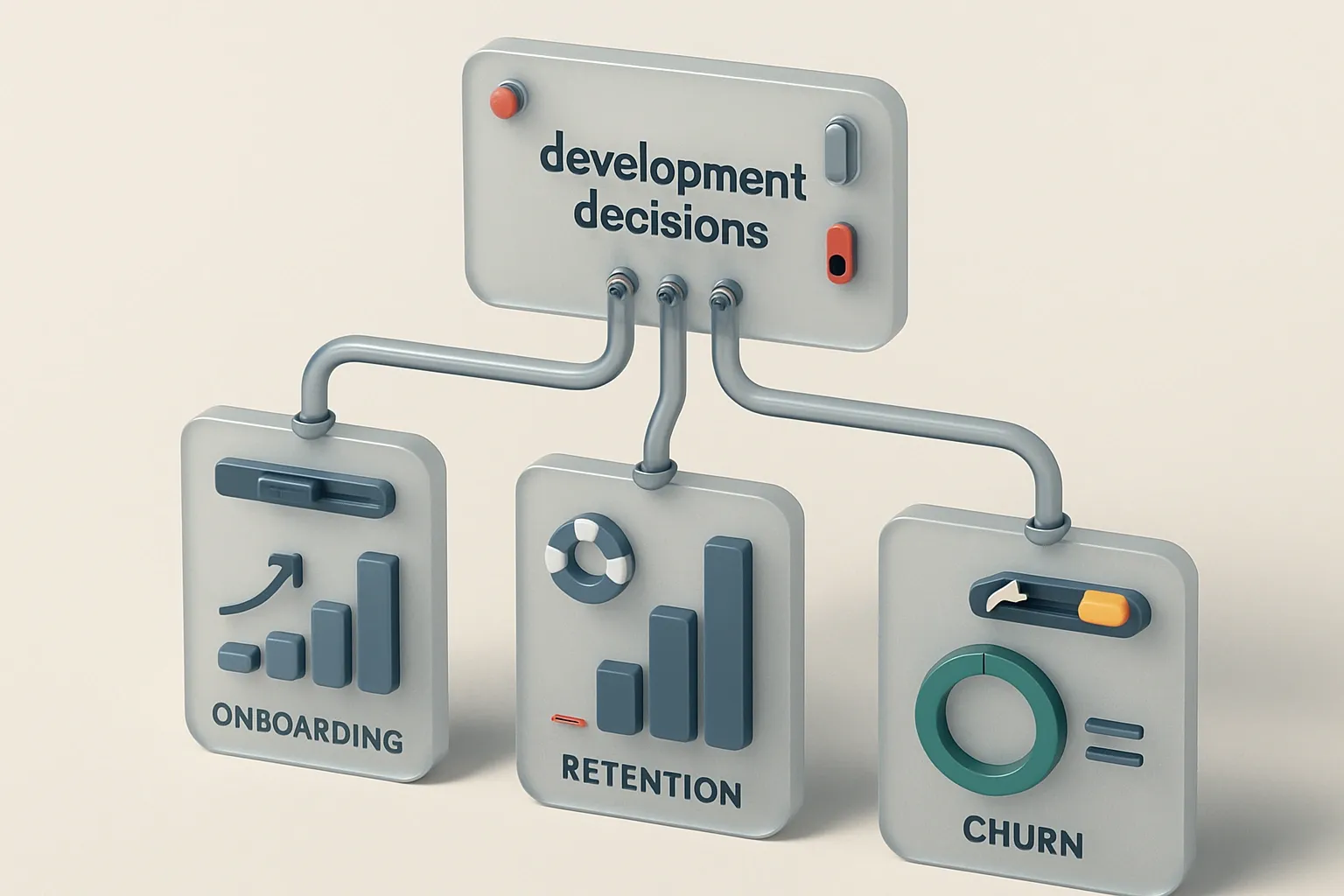
Every decision may affect at least one of the key metrics. This is why a runway-based outcome approach is the best option.
Make the changes, assess the data, and change course if necessary — that’s the formula for success.
For example, optimizing the onboarding experience by making it more linear, interactive, and friction-free can double the activation rate according to one high-profile B2B SaaS case study. This also reduced churn by 10% and led to a substantial increase in monthly recurring revenue (MRR).
Onboarding and Activation
If your registration forms are long, complex, and slow to load, you run the risk of seriously stunting activation rates. Make the process as quick and simple as possible, and guide the user through every step of it.
Retention and Daily Use
When you build a SaaS platform, make it fast and simple. But most importantly, make it effective. If people get what they need without too much hassle, they’re likely to keep coming back, giving you a long-term customer.
Reducing Churn
The world’s best developers know how to build SaaS that reacts to user struggles. It identifies the issue and provides the right help at the right time. A gentle nudge in the right direction can keep users engaged for longer.
Revenue Metrics
Achieving download targets is the easy bit. The real challenge comes when it’s time to turn first-time samplers into long-term payers. Simple pricing pages, clear trial progress, and smooth payment processes can all help in this regard.
When talented developers with a proven track record develop SaaS, they bake in the key metrics right from the start. This means development teams can move quickly and decisively whenever there’s evidence to suggest a change of course is necessary.
Why Data Always Delivers the SaaS Prize

It’s very tempting to make guesstimates to save time, but taking the time to gather and interpret data throughout the SaaS development process always delivers results in the long run.
The world’s top developers test even the smallest of changes at the earliest opportunity. They measure the results, keep what works, and get rid of what doesn’t. It might sound simple, but it’s a proven strategy.
According to Harvard Business Review, increasing customer retention by just 5% can boost profits by anywhere between 25% and 95%. But you can’t maximize retention until you have the necessary data. That’s why the top SaaS developers do the following:
- Try different onboarding flows and pick the winner
- Watch how groups of users behave over time
- Study where people get stuck
- Check if new features actually improve retention
It’s usually not any one change that makes the difference. It’s the accumulation of small changes that delivers the big prize.
Top Tips for Making Your Metrics Count

You don’t need huge teams to develop SaaS with a good chance of long-term success. By following a few relatively simple steps, you can create a metrics-focused roadmap that supports all your key decisions, whether they relate to UX or product development.
Set Clear Targets
Get specific. Set clear targets that are both achievable and measurable. As the bare minimum, you should have targets for the activation rate, retention rate, and LTV-to-CAC ratio. The latter tells you whether you’re spending money wisely to acquire customers.

The total revenue you expect to earn from a single customer over the entire time they stay with you.
CAC = Customer Acquisition Cost
The average amount of money you spend (on marketing, sales, ads, etc.) to bring in one new paying customer.
Map Key User Moments
Where exactly do users get real value from your product? Map these moments and use the information to ensure your onboarding process is as good as it can be.
Track Everything from the Outset
Track as you build. Add basic analytics from the moment the development process starts. This will give you real data from your very first users. This means you’ll never have to make key decisions based on little more than a prediction or anecdotes.
Focus Only on What Moves Metrics
Before building or adding anything new, ask one simple question: “Will this clearly improve activation, retention, or revenue?”
Test and Improve
More haste, less speed. Yes, you’re up against the clock, but taking shortcuts may well prolong the development of your SaaS. Release changes to a small group of users. Then, measure their impact on your key metrics. When something works, roll it out!
Use a Metrics-Focused Approach to Develop SaaS: The High-Profile Success Stories That Prove It Works
Everything we’ve covered in this post is backed up by high-profile, real-world results. Here are just a few of them:
- Slack prioritized getting new teams to send messages quickly. Teams that hit 2,000 messages were 93% likely to stay long-term, driving exceptional retention rates.
- Notion reveals features gradually. As a result, users aren’t overwhelmed, providing a boost to activation and retention rates.
- At Superhuman, speed is the priority, as it allows users to handle emails twice as fast.
- Figma created simple sharing and collaboration tools that make it easy for users to invite others. This led to 132% net dollar retention.
Develop SaaS with the Help of Dedicated Development Partners
When you choose DigiNeat for SaaS app development, you’re not just getting a service provider. You’re getting a partner who is just as invested in the success of your concept as you and your team are.
For a metrics-focused approach to SaaS application development that prioritizes incremental results over rushed launches, contact the DigiNeat team today to arrange an initial strategy consultation.