
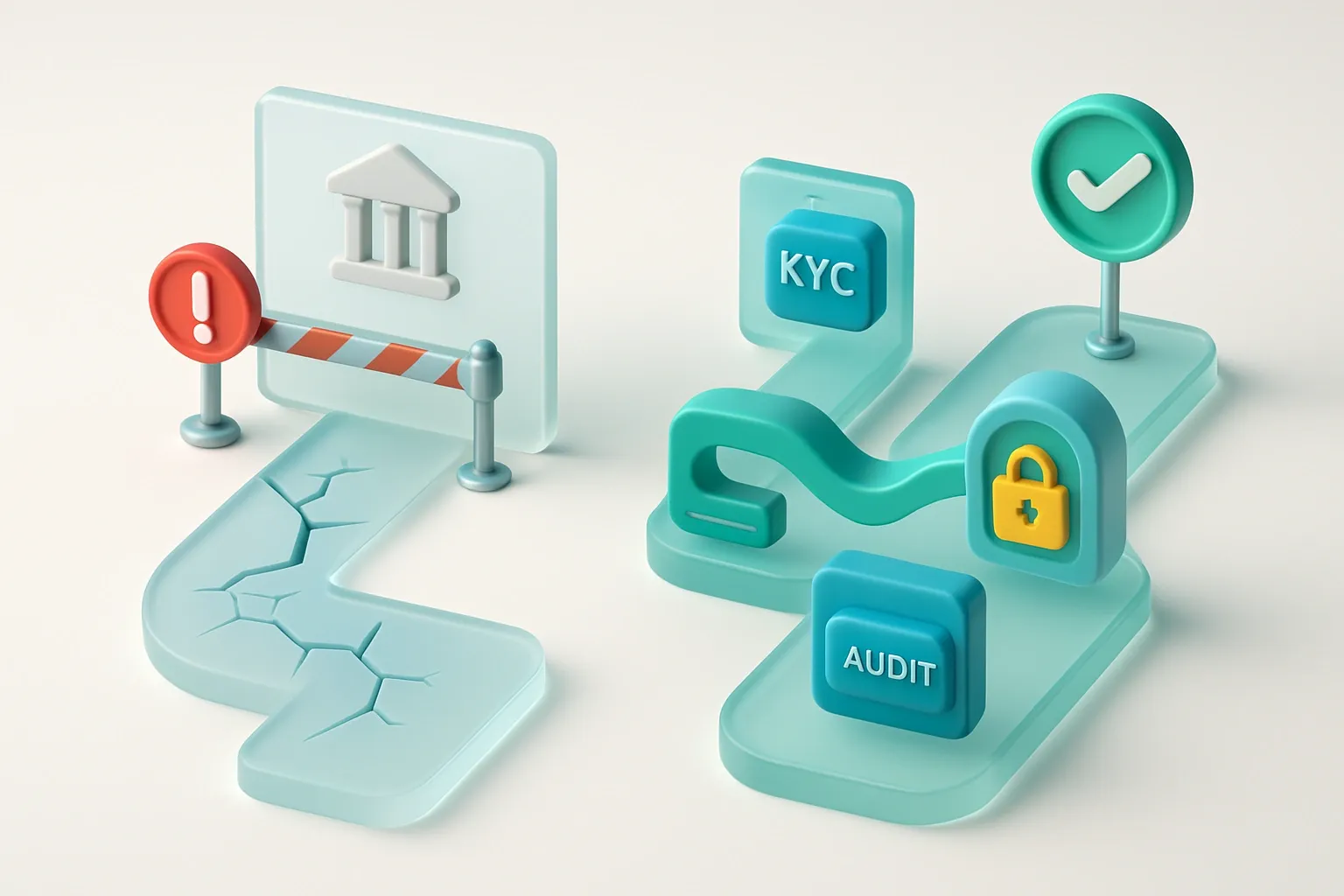

MVPs in FinTech: Why “Fast Launches” Fail Without Regulatory Readiness
But too many inexperienced developers and founders choose to ship now and fix later. And that’s one of the reasons 73% of fintech software development projects fail within the first three years.
As you’ll already know, fintech is subject to a minefield of regulations. What complicates matters more for international platforms is the need to negotiate the rules of several jurisdictions simultaneously.
But as we’ve demonstrated several times at DigiNeat, it is possible to embed regulatory readiness into your MVP without sacrificing speed. Let’s examine how.
The Key Difference Between SaaS MVPs and FinTech MVPs

Back in the old days (just a year or two ago), the favored approach to MVP development involved speed and a highly limited scope. Get your product to the target audience ASAP, collate the feedback, and iterate as quickly as possible.
Now, this is still a viable option for SaaS platforms such as productivity software and project management apps. Why? Because the regulatory hurdles that must be overcome are relatively small and inconsequential.
But as you’ll already know, the landscape for fintech platforms is very different.
Fintech software handles real money. It stores personal information. It processes transactions. And, it has to ensure full compliance with a complex web of interwoven regulations at all times.
Even if you’re targeting a very small and highly limited fintech MVP, you’ll need to include various compliance elements as an absolute minimum — secure data flows, audit trails, and regulator integration, to name just a few!
While fintech app development teams are often tempted to skip these headaches until there’s a proven case for further development, doing so raises a series of potentially disastrous issues:
- Blocked API access or banking partnerships
- Launch delays while scrambling for approvals
- High risk of fines, legal issues, or forced shutdowns
- Loss of user trust if something goes wrong early
Compliance should be a core feature of your fintech MVP — and not a can to be kicked down the road. To fully validate your idea, regulatory compliance must be tested. You can do this with tools such as regulatory sandboxes, synthetic data, and help from licensed partners.
MVP Scoping with In-Built Regulatory Compliance

The best fintech developers can deliver the smallest possible viable product while complying with regulatory requirements.
At DigiNeat, we have developed a proven system for regulatory-aware scoping that includes the following steps:
Identify the Minimum Financial Flow
Start by focusing on a key type of transaction and limit the scope to that. For example, you might want to start with peer-to-peer transfers or a basic top-up procedure.
Map Regulatory Basics at the Earliest Opportunity
There’ll be a few non-negotiable compliance elements to include in your MVP. KYC checks, secure data handling, and anti-fraud measures are usually mandatory in most jurisdictions.
Use public regulatory sandboxes (offered by many central banks) to test ideas safely with synthetic data or limited real users.
Work with Partners to Lighten the Load
You probably don’t have to reinvent the wheel in order to create a fully compliant fintech MVP. Integrate a proven Banking-as-a-Service (BaaS) service licensed platforms to leverage existing compliance measures, such as AML screening.
Use Modular Architecture
Keep regulated features in separate, isolated modules so you can test and scale them independently.
When fintech MVPs fail to include regulatory compliance measures , they are prone to premature failure — particularly in emerging markets. Don’t be seduced by a quick launch. Get the basics right first, and you’ll save yourself a lot of compliance headaches down the line.
Building Trust and Compliance Through UX Excellence

Every reputable fintech software development company understands the nature of the industry it serves. For example, they know that users are usually required to share sensitive financial information at the beginning of the onboarding process. This means earning the trust of users is vital — from the first interaction.
Have you ever ditched an app because it didn’t look or “feel” right? If you’ve ever used the app of a leading bank, for example, you’ll know what a premium experience looks like. And, by extension, you’ll know what it doesn’t look like.
If a company cuts corners with its app, would you trust it with your money and financial information? Probably not.
With experienced UX specialists in your corner, you can create fintech MVPs that instill trust and confidence from the very first sign-in. At DigiNeat, we use a few proven strategies to do this:
Clear Privacy and Security Signals
Tell users about your security measures at the right stages of each process. Display your security badges in prominent positions. And when you ask for sensitive information, explain why and how it will be used.
Gradual Onboarding
Even the slightest amount of friction during any process or transaction has the potential to send users elsewhere. This is particularly the case for onboarding, so start with basic information and ask the user for more gradually. Talk them through the process as if this is the first fintech app they’ve used.
Easy-to-Follow Flows
Think about the features that make the user’s life easier. The likes of biometric login, real-time progress bars, and clear consent steps ensure all users navigate essential processes with relative ease.
One area that many MVP development companies struggle with is document uploading processes, so make use of any available tools, including mobile camera capture.
Transparent Processes
Users should be able to view their transaction history at any time — without hassle or protracted searches. Data usage summaries also build user confidence and trust.
The average abandonment rate for fintech platforms can be as high as 63% during digital onboarding.
Validate Iteratively and Minimize the Risk of Breaches

Now it’s time to validate your concept in stages. Do this by gathering feedback and establishing product-market fit. But proceed without exposing your platform to undue regulatory scrutiny.
Use outcome-based milestones to structure this phase safely and efficiently. Break development into clear, verifiable checkpoints tied to measurable results. Then, you can perform a series of tests to ascertain the level of risk your fintech MVP is exposed to:
- Use regulatory sandboxes such as those from the FCA in the UK and the CFPB in the US
- Perform early tests with fake or anonymized data
- Run small, limited pilots with beta testers
- Collect feedback quickly
This iterative approach reduces risk dramatically. Issues are caught early. You prove viability to investors/partners without full exposure. And, crucially, you build evidence for scaling.
The result? A data-backed MVP that validates your idea, remains compliant, and positions your fintech platform for confident growth.
Partner with a Proven Fintech Software Development Company

UX design is the key to building trust and staying on the right side of regulatory requirements. Together with iterative validation — something we do through the use of sandboxes, synthetic data, pilots, and outcome-based milestones — user experience can make or break your entire fintech software development project.
Give your fintech app development project the best possible chance of success. Ensure your fintech MVP is compliant with local financial regulations from the outset by contacting the DigiNeat team today for a free strategy call.